

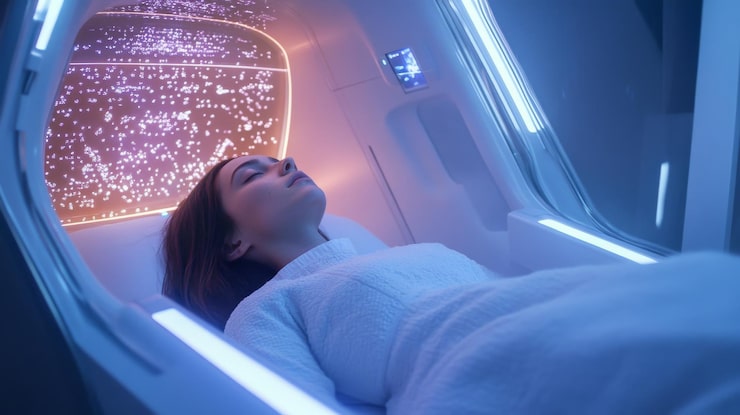
In a city where time is the ultimate luxury and performance is non-negotiable, recovery has become a discipline—not a luxury. Among the UAE’s elite, a quiet but powerful shift is underway: the migration of advanced medical-grade therapies from exclusive clinics into private residences. At the center of this transformation are two technologies once reserved for professional athletes and specialized treatment centers—hyperbaric oxygen therapy (HBOT) and cryotherapy.
What was once a post-injury solution is now a proactive lifestyle strategy. For high-performing executives, investors, and founders operating in relentless cycles of decision-making, recovery is no longer reactive—it is engineered, scheduled, and optimized..
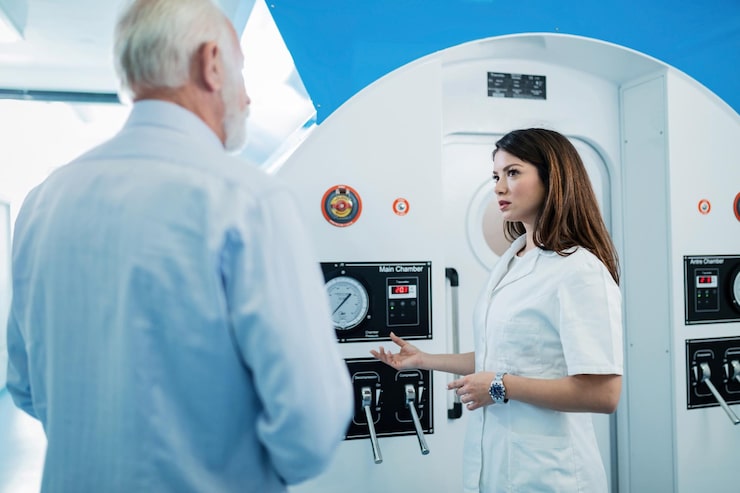
The New Status Symbol: Controlled Recovery
Luxury has always been about access—access to space, privacy, and exclusivity. Today, that definition is expanding to include something far more valuable: control over one’s biology.
Imagine stepping out of a late-night strategy call and into a hyperbaric chamber calibrated to accelerate cellular repair. Or beginning the day with a three-minute cryotherapy session that sharpens focus and resets the nervous system. These are not indulgences—they are routines, as essential as a morning espresso or a boardroom briefing.
For the UAE’s top tier, installing a hyperbaric chamber or a cryotherapy unit at home is not about novelty—it’s about eliminating friction. The traditional model of booking appointments, commuting to clinics, and waiting for sessions is incompatible with a calendar that runs at global speed.Instead, recovery is being embedded into the architecture of daily life.
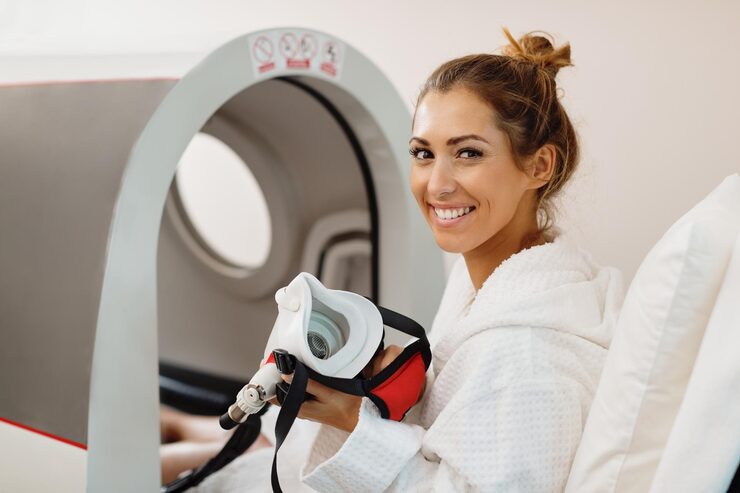
Hyperbaric Oxygen Therapy: Rewriting Cellular Efficiency
Hyperbaric oxygen therapy operates on a deceptively simple principle: increase the amount of oxygen your body can utilize. By placing the individual in a pressurized chamber and delivering pure oxygen, the body is able to dissolve significantly more oxygen into the bloodstream than under normal conditions. The implications are profound.
At a cellular level, oxygen is the currency of energy production. By enhancing oxygen delivery, HBOT supports tissue repair, reduces inflammation, and promotes the regeneration of cells. For executives dealing with chronic stress, long-haul travel, and irregular sleep patterns, this translates into faster recovery and improved cognitive clarity.
But the appeal goes beyond recovery. Increasingly, HBOT is being used as a tool for performance enhancement and longevity. Users report improved focus, better memory retention, and sustained energy levels—qualities that are invaluable in high-stakes environments.
In the UAE, where innovation and early adoption are part of the cultural fabric, homeowners are investing in state-of-the-art chambers that rival those found in top-tier medical facilities. These systems are often integrated into dedicated wellness suites, complete with biometric monitoring and AI-driven optimization. The experience is seamless, private, and deeply personalized.
Cryotherapy: The Power of Extreme Contrast
If hyperbaric therapy is about saturation, cryotherapy is about shock. By exposing the body to temperatures as low as -110°C for short durations, cryotherapy triggers a powerful physiological response. Blood vessels constrict, inflammation is reduced, and the body releases a surge of endorphins and adrenaline. When the session ends, circulation rebounds—delivering oxygen-rich blood back to tissues with renewed intensity.
For the UAE’s elite, the appeal lies in its efficiency. A session lasts just a few minutes, yet the effects are immediate and noticeable. Muscle soreness dissipates, mental fog clears, and the body enters a heightened state of alertness.
This makes cryotherapy particularly valuable for individuals balancing physical training with demanding professional schedules. Whether it’s recovering from an early morning workout or preparing for a critical meeting, the ability to reset the body quickly is a significant advantage.
In private residences, cryotherapy units are often paired with other contrast-based therapies—cold plunge pools, infrared saunas, and steam rooms—creating a comprehensive recovery circuit. The goal is not just to relax, but to actively train the body’s resilience.
Designing the Home as a Performance Lab
The integration of these technologies is reshaping residential design in the UAE. Homes are no longer static spaces; they are dynamic environments engineered for performance.
Architects and designers are collaborating with medical consultants and wellness experts to create dedicated recovery zones. These spaces are acoustically insulated, climate-controlled, and equipped with advanced monitoring systems that track everything from heart rate variability to oxygen saturation.
The aesthetic is intentionally understated. Unlike traditional luxury features that demand attention, recovery technologies are designed to blend seamlessly into the environment. The focus is on experience, not display.
This aligns with a broader shift toward intentional living—a philosophy that prioritizes function, well-being, and longevity over superficial excess.
Privacy, Precision, and Personalization
One of the key drivers behind this trend is privacy. For high-profile individuals, discretion is paramount. Accessing cutting-edge therapies in a public setting can be inconvenient at best and compromising at worst.
By bringing these technologies into the home, executives gain complete control over their environment. Sessions can be scheduled at any time, protocols can be customized, and data can be kept entirely private.
This level of personalization is further enhanced by the integration of wearable technology and health analytics. Data collected from sleep trackers, fitness devices, and blood tests can be used to fine-tune recovery protocols, ensuring that each session is aligned with the individual’s current physiological state.
The result is a feedback loop—where data informs action, and action drives measurable improvement.
The Influence of Elite Sports and Silicon Valley
The adoption of hyperbaric and cryotherapy in the UAE is not happening in isolation. It reflects a broader convergence of influences—from elite sports to Silicon Valley’s biohacking culture.
Professional athletes have long understood the importance of recovery in maintaining peak performance. What is new is the translation of these practices into the corporate world.
At the same time, tech entrepreneurs and biohackers have popularized the idea of optimizing the body as a system. Concepts like “human performance engineering” and “longevity optimization” are gaining traction among executives who see their bodies as assets to be managed with the same rigor as their businesses.
The UAE, with its openness to innovation and its concentration of global talent, is uniquely positioned to adopt and amplify these trends.
Beyond Wellness: A Strategic Advantage
At first glance, the installation of medical-grade recovery pods might appear to be an extension of luxury—a new way to differentiate and indulge. But for those who are adopting these technologies, the motivation is far more strategic.
In a competitive environment where margins are thin and decisions carry significant consequences, clarity, stamina, and resilience are critical differentiators. The ability to recover faster, think sharper, and sustain performance over time is not just beneficial—it is essential.
Recovery, in this context, becomes a form of preparation. It is the foundation upon which performance is built.
The Future of High-Performance Living
As the boundaries between health, technology, and lifestyle continue to blur, the home is emerging as the central hub of this integration. What we are witnessing in the UAE is not just a trend, but a redefinition of how space is used and experienced.
The inclusion of hyperbaric and cryotherapy systems is a reflection of a deeper shift—a move toward environments that actively support the individual’s goals, rather than simply accommodating them.
In the years ahead, this approach is likely to become more sophisticated. Advances in AI, biotechnology, and materials science will further enhance the capabilities of home-based recovery systems, making them more efficient, accessible, and personalized.
For now, the message is clear: in the pursuit of excellence, recovery is no longer optional. It is engineered, embedded, and elevated—right at home.
